Core pain points:
Bottlenecks in manual welding: Reliance on experience, poor consistency in weld seams, high defect rates such as undercutting and porosity, low efficiency, high cost, and health hazards.
Limitations of traditional welding robots:
Inadequate accuracy and stability: Long-term use leads to accuracy drift due to mechanical clearance (repetitive positioning accuracy often exceeds ±0.1mm), affecting the precision of arc initiation and arc termination.
Poor trajectory performance: Large speed fluctuations during complex curve welding, uneven accumulation of weld beads at corners, and easy burnthrough during thin plate welding.
System integration is complex: collaborative debugging with external positioners and welding power supplies is cumbersome, the process window is narrow, and production change programming is time-consuming.
Solution:
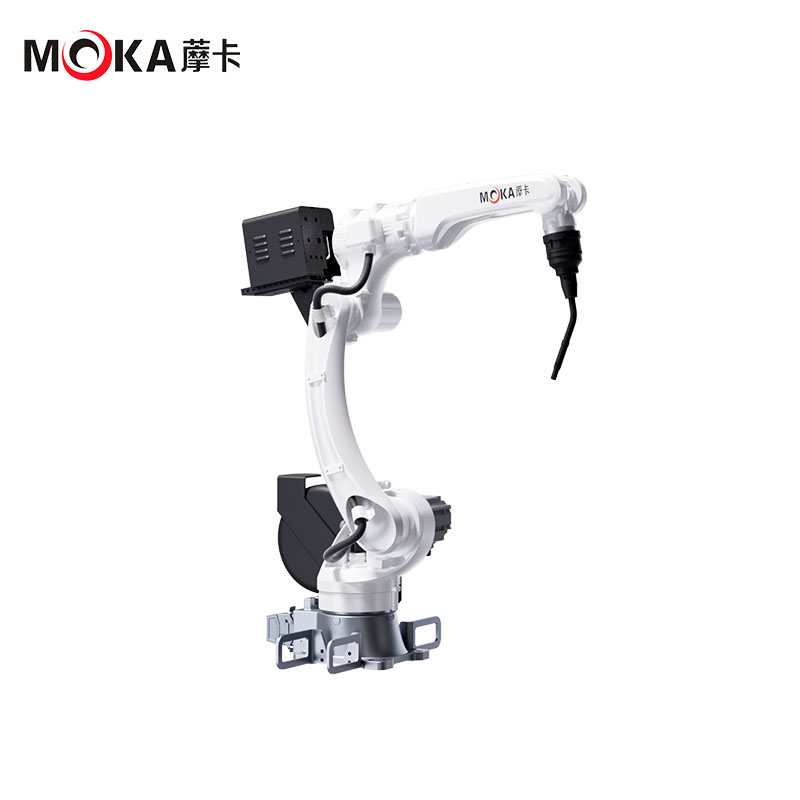
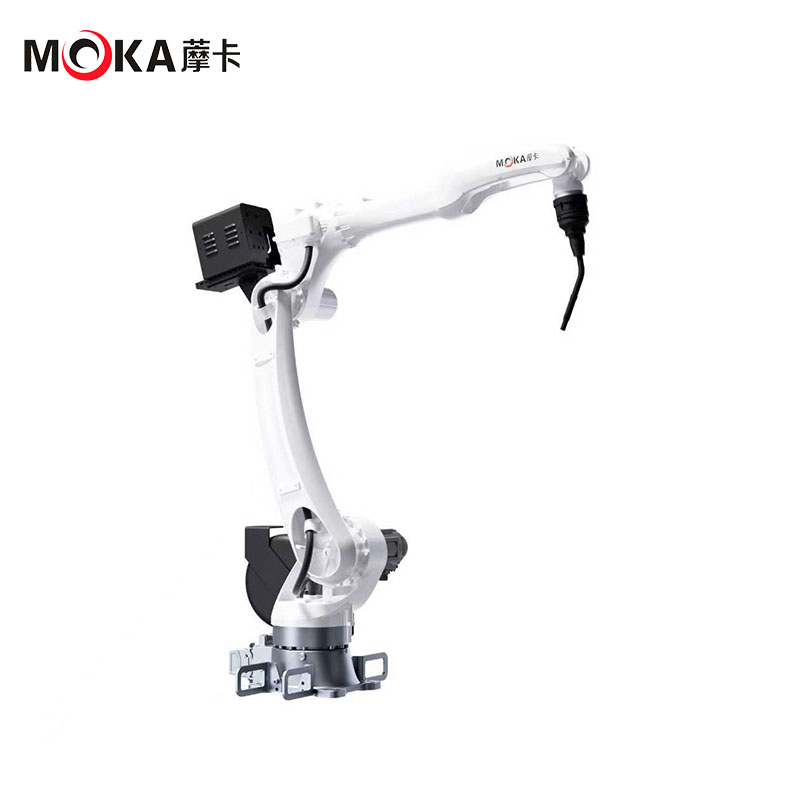
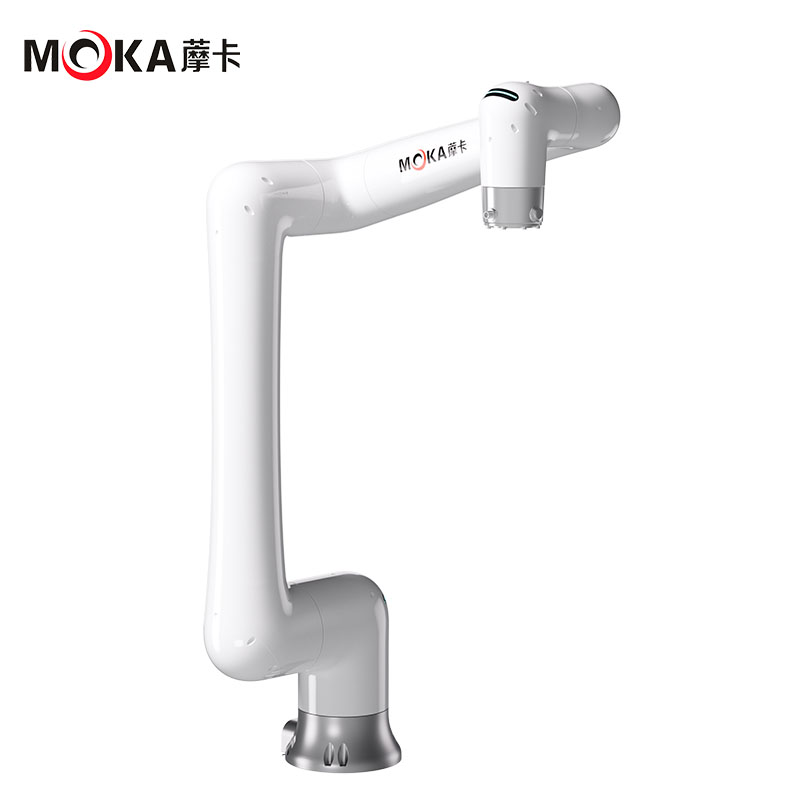
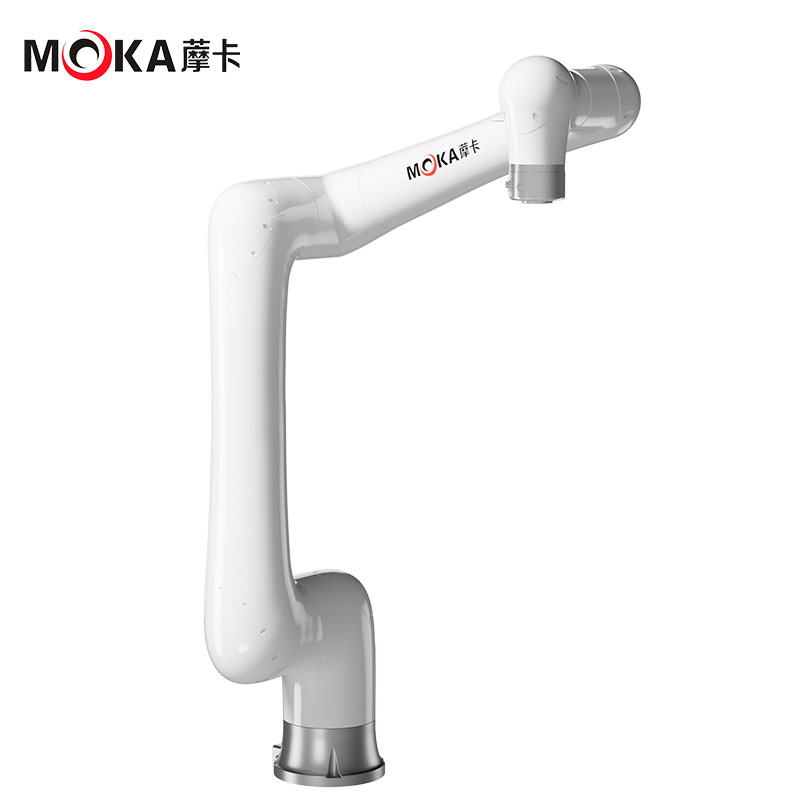
In response to the stringent requirements of welding processes, the Luka welding robot achieves superior welding performance compared to traditional robots through its specialized structure, high-performance control, and deep process integration.
Dedicated structure and high-precision guarantee
The adoption of a hollow arm body and integrated cable package significantly reduces cable interference and wear in welding guns. The arm reach is optimized for common workpiece sizes, enhancing spatial accessibility. With a repeatability accuracy of ±0.03mm, it far surpasses traditional welding robots, ensuring that the arc starting point repeatability deviation remains below 0.05mm during long-term operation, guaranteeing consistency in the starting point of the weld seam.
Excellence Track and Process Control
Equipped with a high-dynamic servo system and a forward-looking jitter suppression algorithm, it achieves speed foresight and smooth transition under complex trajectories. In applications such as fillet welding and circumferential welding, the welding speed fluctuation rate is less than 5% (compared to over 15% for traditional solutions), effectively improving the uniformity of the weld bead.
Intelligent welding process integration
Equipped with a built-in welding process database, it supports one-click access to parameters. Standard arc tracking and laser positioning interfaces are provided, enabling adaptive compensation for workpiece assembly errors and thermal deformation. Through deep collaboration between the process package and the welding power source, typical weld seam programming time is reduced by more than 50%. Arc tracking can compensate for workpiece deviations of ±2mm in real time.
High reliability and easy maintainability
The key components have a protection level of IP67, making them suitable for welding fume environments. The modular design facilitates rapid maintenance. The mean time between failures (MTBF) is greater than 60,000 hours. It provides collision detection and recovery functions to reduce losses caused by unexpected interruptions.
Achieved results (typical application scenario case):
Quality and Efficiency: In the welding of steel structural components, the first-pass yield of welds has been increased from approximately 92% manually to over 99.2%, resulting in a comprehensive welding efficiency improvement of 40%-60%.
Cost and Flexibility: A single unit can replace 2-3 senior welders. When paired with a positioner, it enables rapid production changeover for multiple types of workpieces, reducing the time required for new product introduction and debugging by approximately 70%. Return on investment: Under a two-shift production system, the investment recovery period is typically 12-18 months.